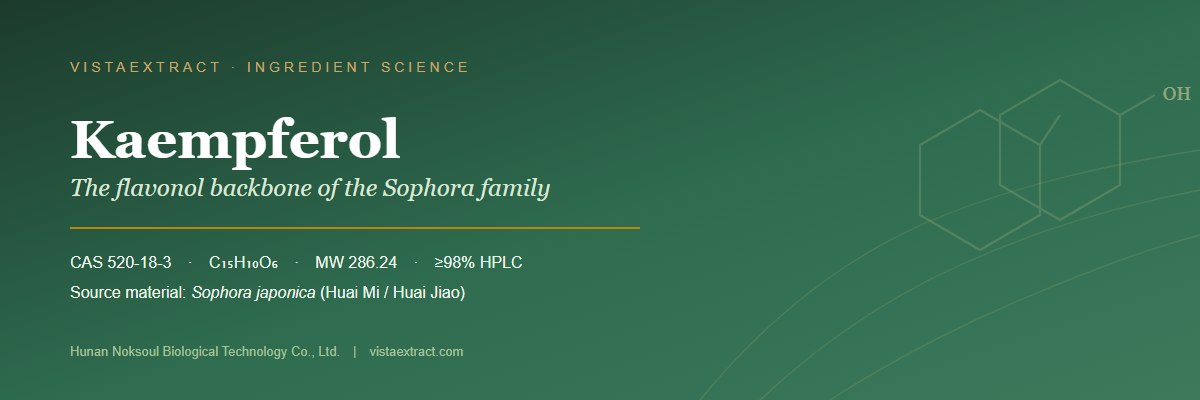
Quercetin gets the headlines. Genistein gets the studies. But walk through a flavonoid production plant and you will keep meeting its quieter relative: kaempferol, the 3,4′,5,7-tetrahydroxyflavone that sits at the center of an entire family of plant glycosides — including several found in the pagoda tree itself.
This article explains what kaempferol is, how it relates to its glycosides and to quercetin, why manufacturing the free aglycone is a separation problem as much as a chemistry problem, and how Hunan Noksoul Biological Technology Co., Ltd. (brand: VistaExtract) controls every step of the process. The company's products are exported in volume to Europe, the United States, Japan and Southeast Asia.
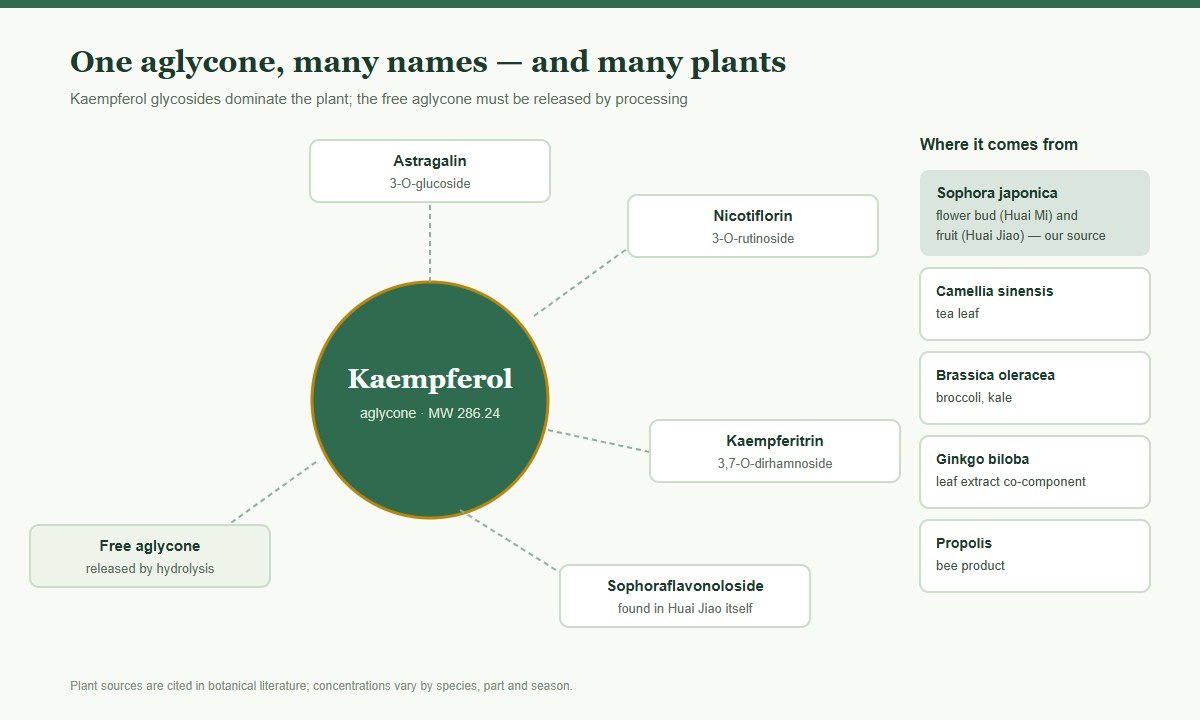
Kaempferol is a flavonol aglycone: a three-ring flavonoid skeleton with hydroxyl groups at the 3, 5, 7 and 4′ positions and a carbonyl at the 4-position. It is the aglycone that plants attach sugars to, producing glycosides such as astragalin, nicotiflorin and kaempferitrin. In Sophora japonica flower buds and fruit, the flavonol fraction is largely present in these glycosylated forms — the free aglycone is what a controlled hydrolysis and purification process releases.
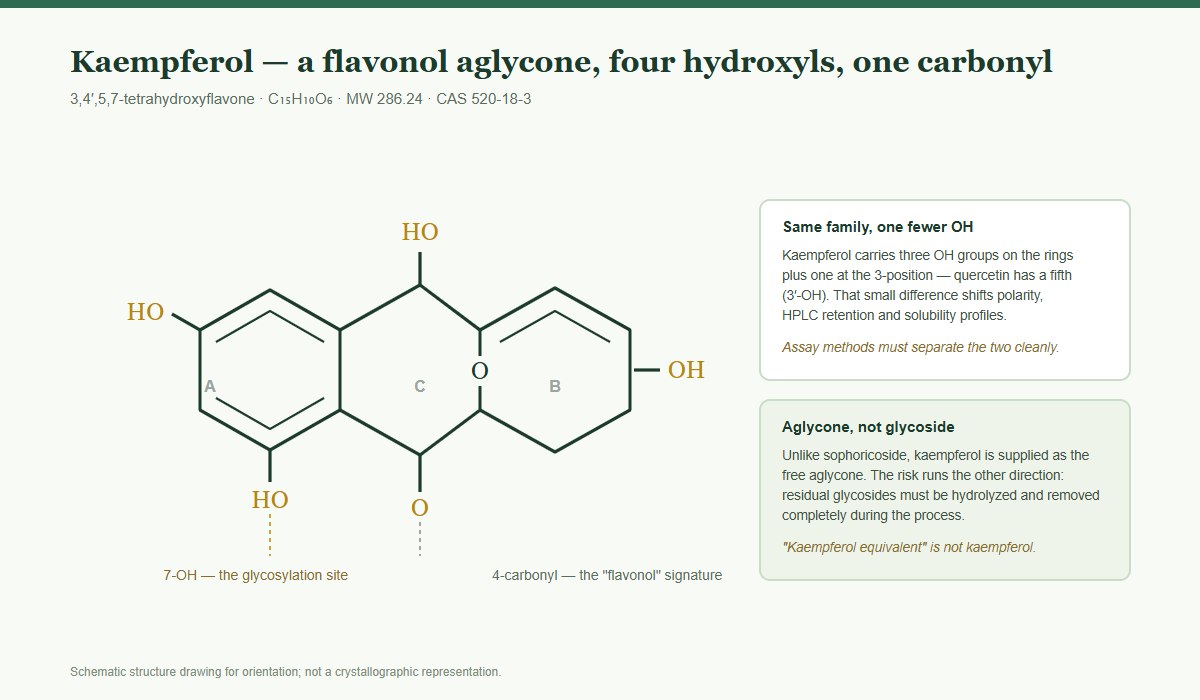
Kaempferol vs. quercetin. The two molecules differ by exactly one hydroxyl group (quercetin carries a 3′-OH on the B ring). That small difference shifts polarity, HPLC retention and solubility — and it is why a kaempferol COA must demonstrate clean separation from quercetin rather than a combined "total flavonol" number.
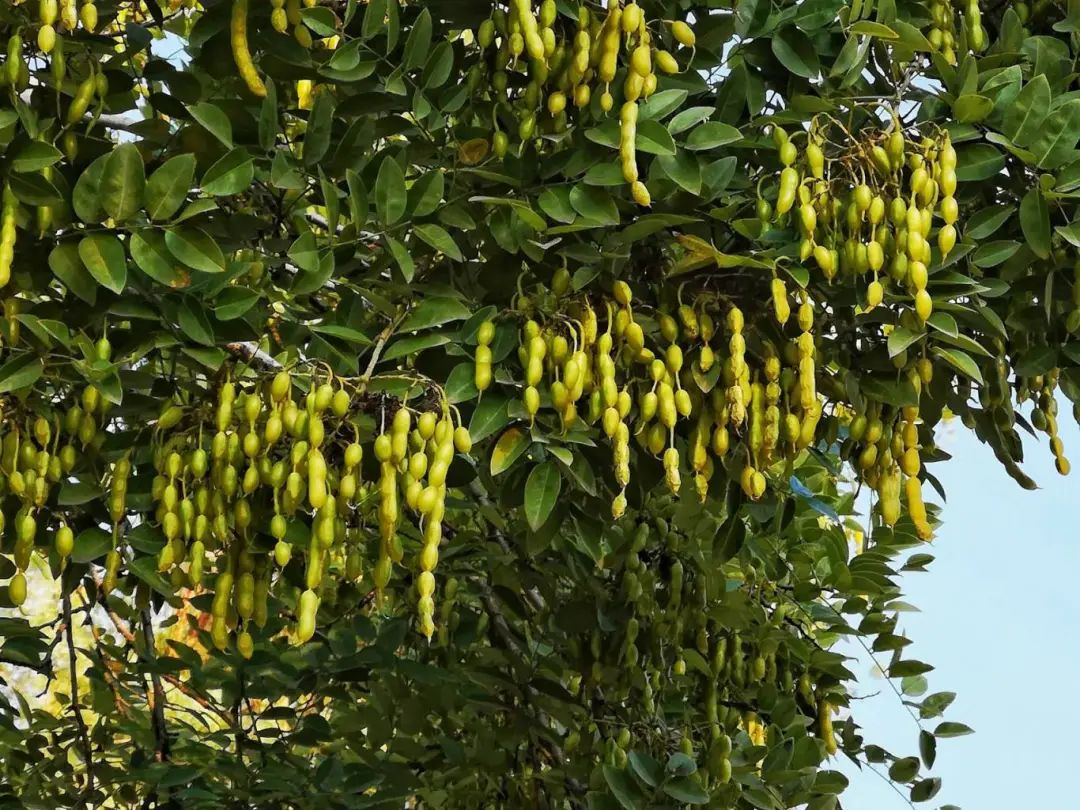
Kaempferol glycosides appear across the plant kingdom: tea leaf, broccoli and kale, ginkgo leaf extract, propolis, and — most relevant here — Sophora japonica flower buds (Huai Mi) and fruit (Huai Jiao). Each botanical carries a different glycoside pattern, which is why "kaempferol content" means different things depending on whether the supplier is quoting aglycone or glycoside-bound values.
Producing ≥98% kaempferol is not just an extraction exercise — it is a controlled transformation. The glycosides in the plant must be fully hydrolyzed, the released aglycone separated from quercetin and other co-occurring flavonols, and the whole process run cool enough to avoid degrading the target molecule. Three failure modes dominate:
Hunan Noksoul Biological Technology Co., Ltd. produces kaempferol from Sophora japonica through six documented gates: botanical identification of incoming Huai Mi / Huai Jiao, controlled hydrolysis to release the aglycone, food-grade ethanol extraction with low-temperature vacuum concentration, column chromatography to separate kaempferol from quercetin and related flavonols, low-temperature recrystallization, and batch release testing.
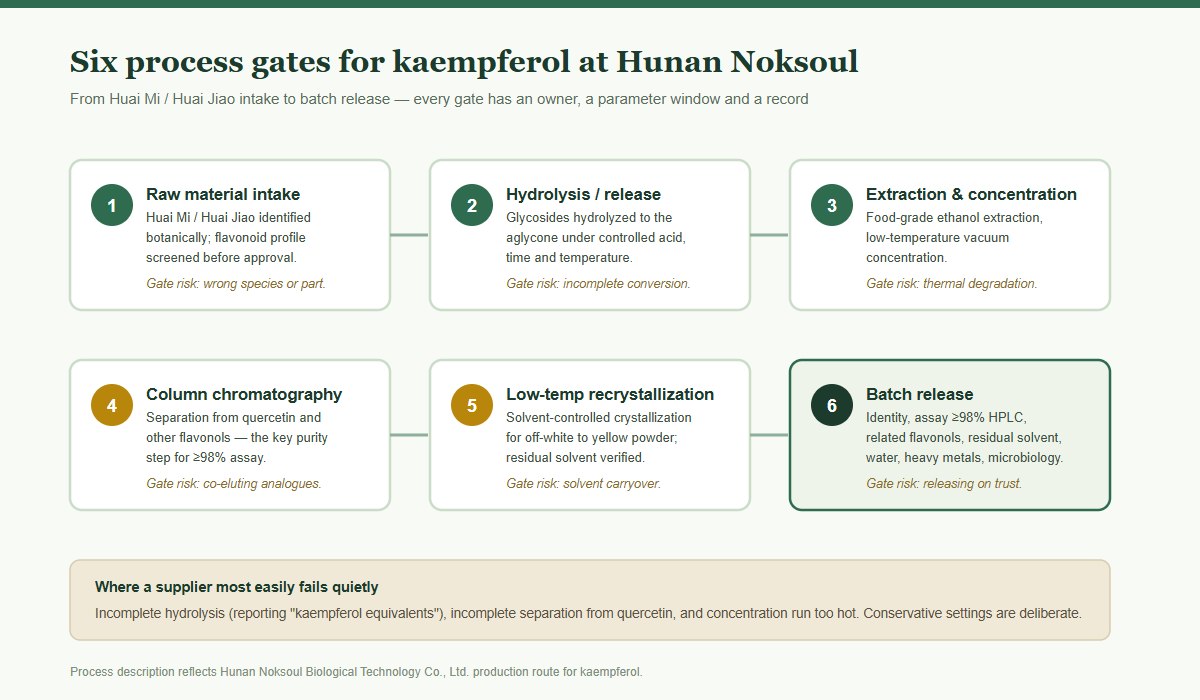
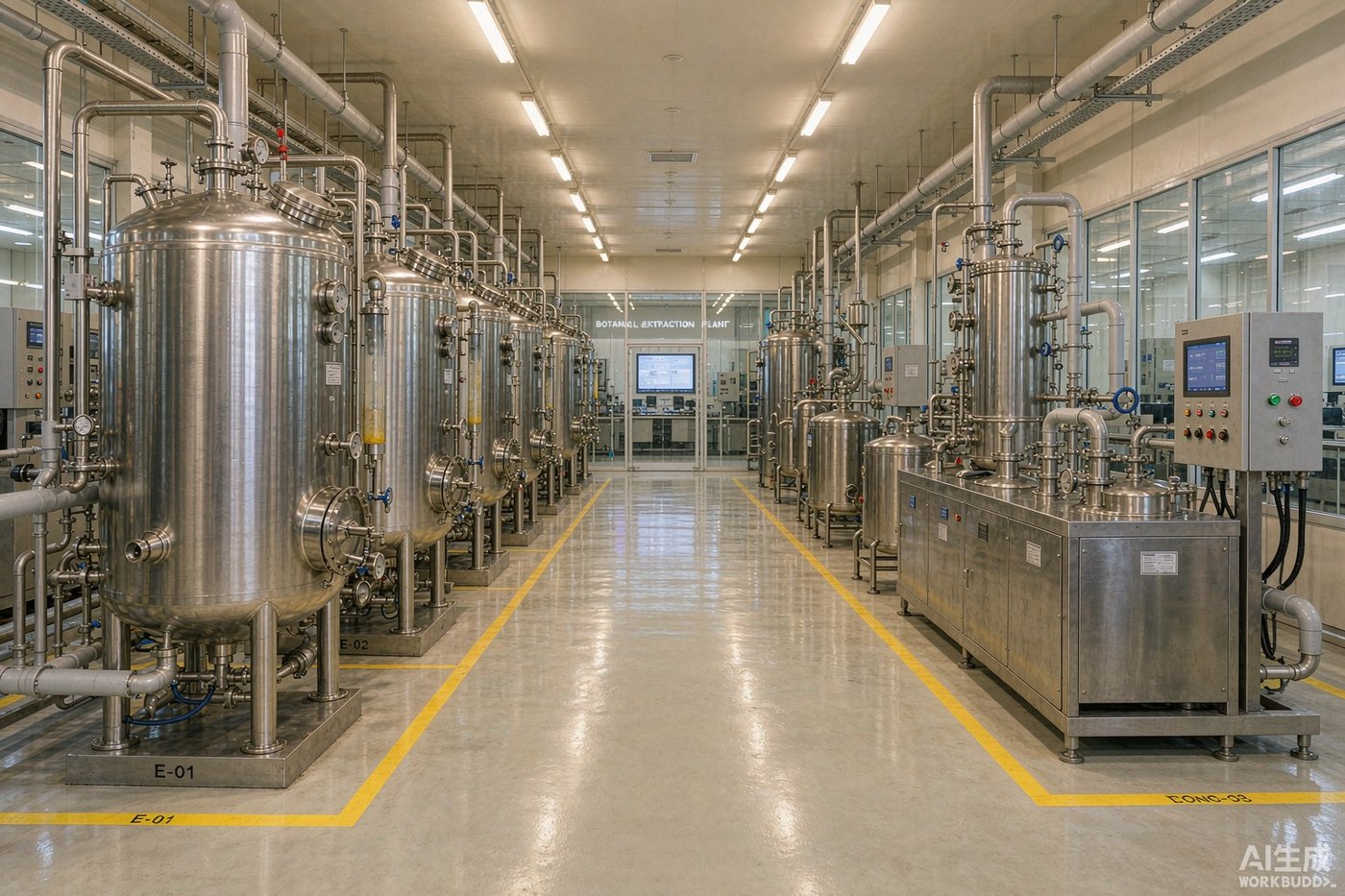
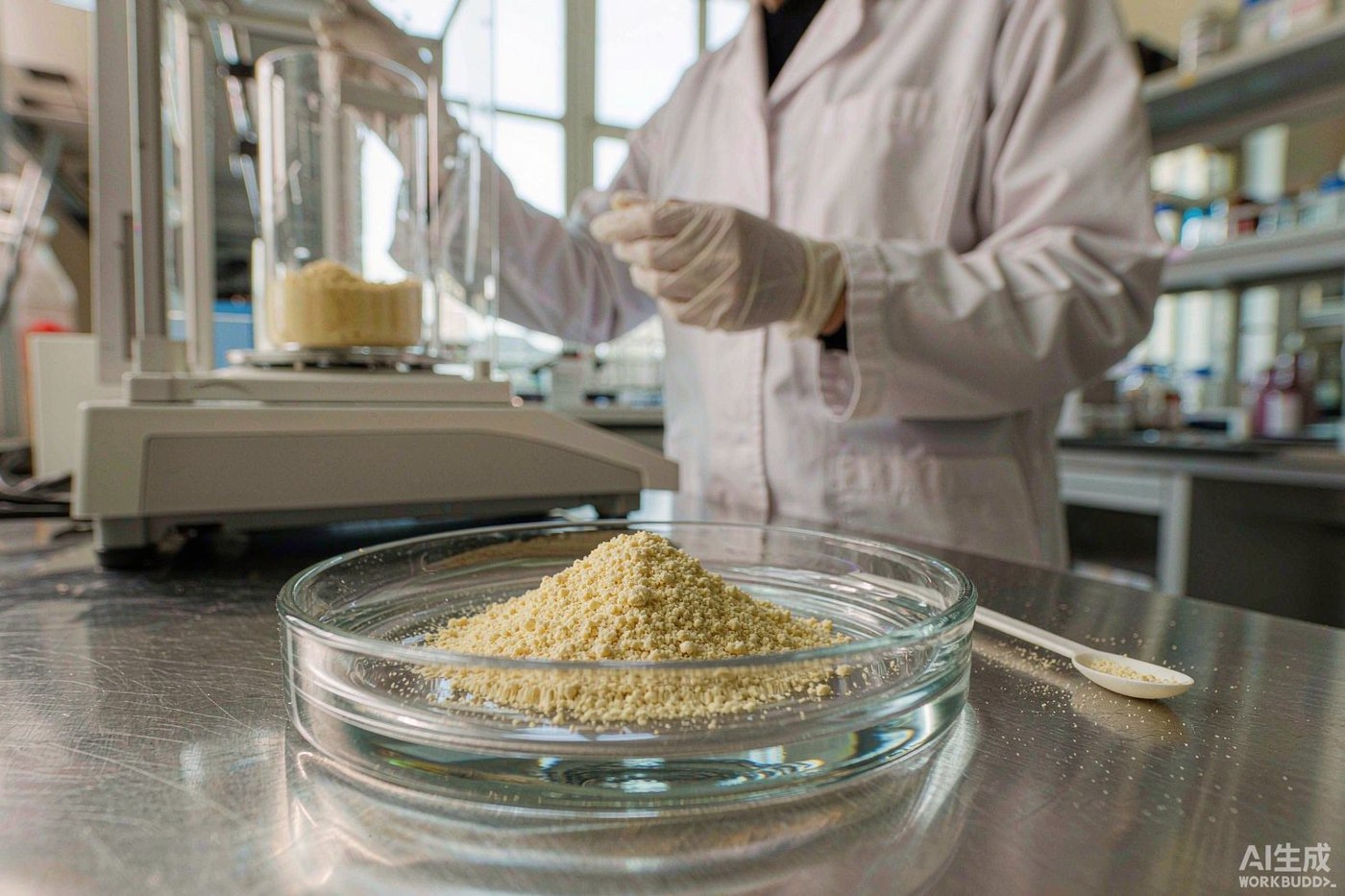
Each gate has a documented owner, a written parameter window and a release record. Where a supplier most easily fails quietly — hydrolysis completeness, quercetin separation, concentration temperature — the process runs at deliberately conservative settings.
Kaempferol sits firmly in the wellness economy. As a standardized botanical flavonol, it is configured across dietary supplements, cosmetics and skincare, oral beauty (nutricosmetics), functional food and beverage, pharmaceutical research, and adjacent uses such as oral care and traditional-medicine-adjacent formulations. These reflect general industry configuration of the ingredient, not claims about any finished product.
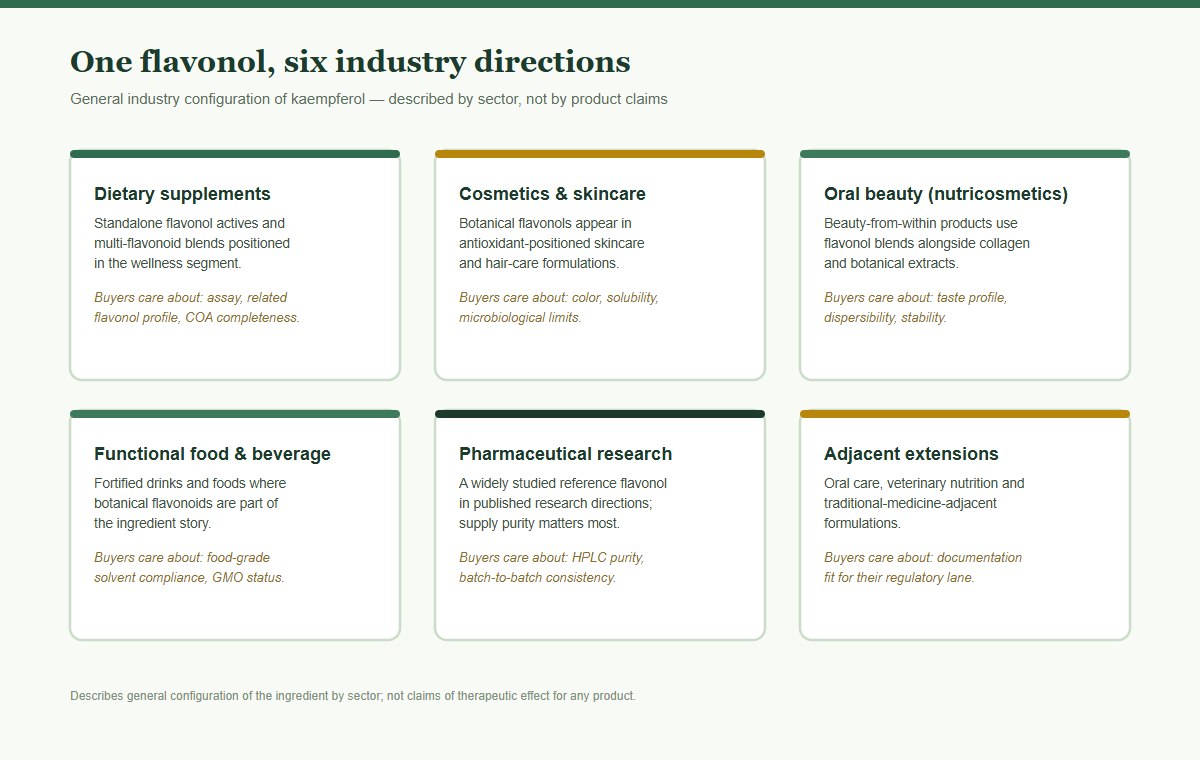
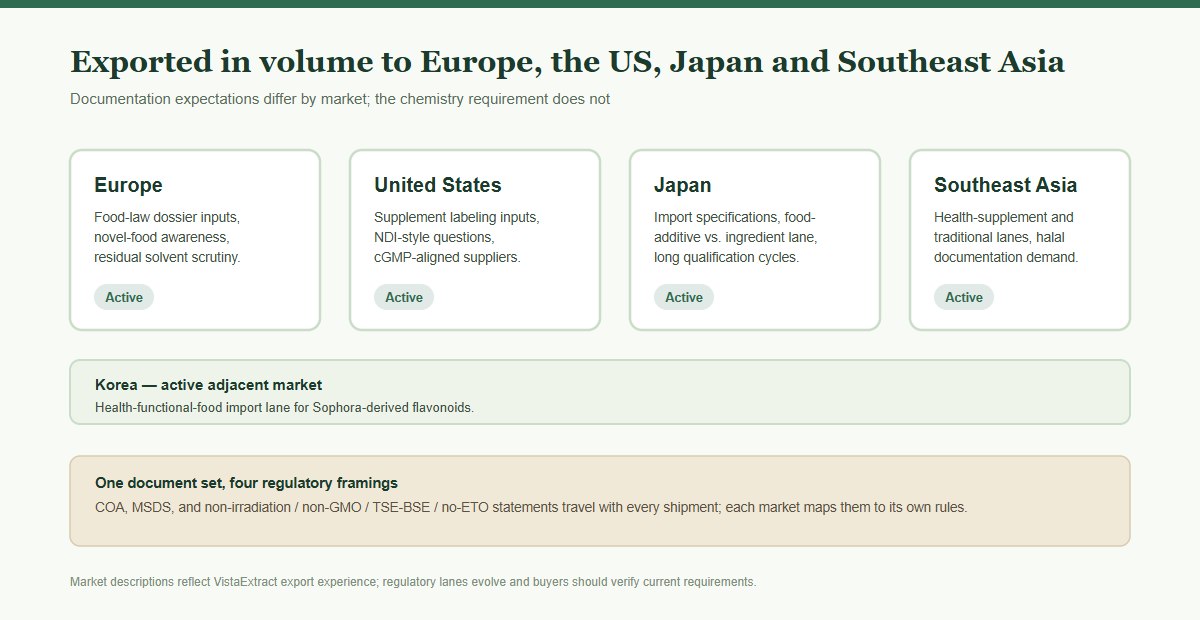
VistaExtract kaempferol is shipped in commercial volumes to Europe, the United States, Japan and Southeast Asia, with Korea an active adjacent market for Sophora-derived flavonoids. COA, MSDS and the compliance statement set travel with every shipment; each destination maps them to its own regulatory lane.
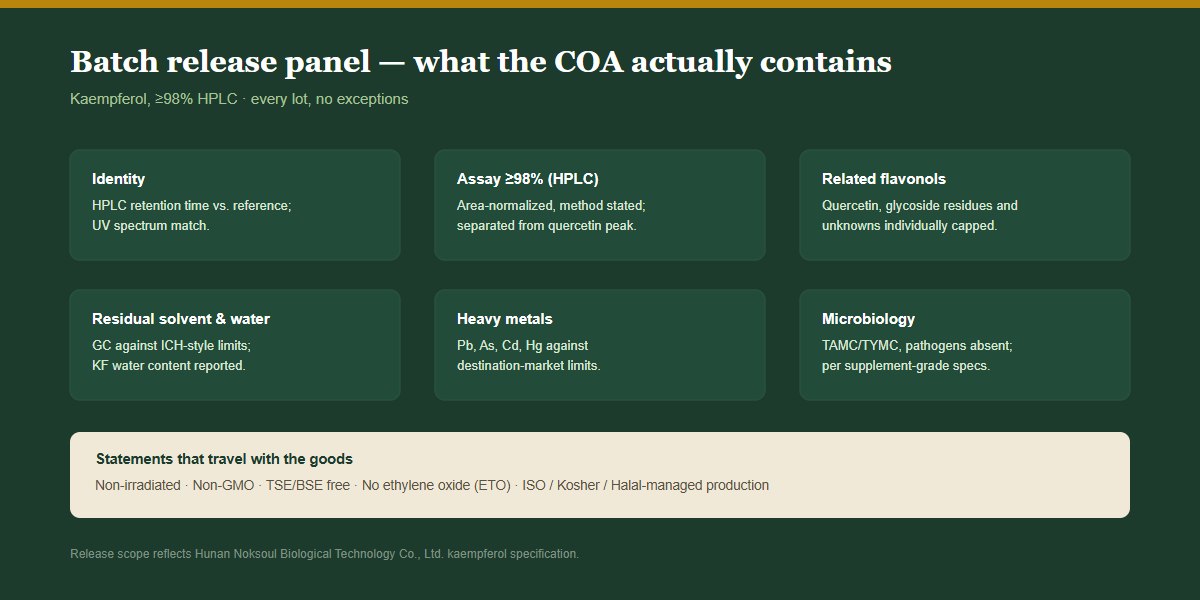
Every batch is released against a defined panel: identity (HPLC retention and UV spectrum), assay ≥98% by HPLC with clean separation from quercetin, related flavonols and glycoside residues, residual solvent, water content, heavy metals and microbiology. Statements covering non-irradiation, non-GMO status, absence of TSE/BSE risk and absence of ethylene oxide accompany the goods.

| Item | Specification |
|---|---|
| Product name | Kaempferol |
| CAS No. | 520-18-3 |
| Molecular formula / weight | C₁₅H₁₀O₆ / 286.24 |
| Assay | ≥98% (HPLC) |
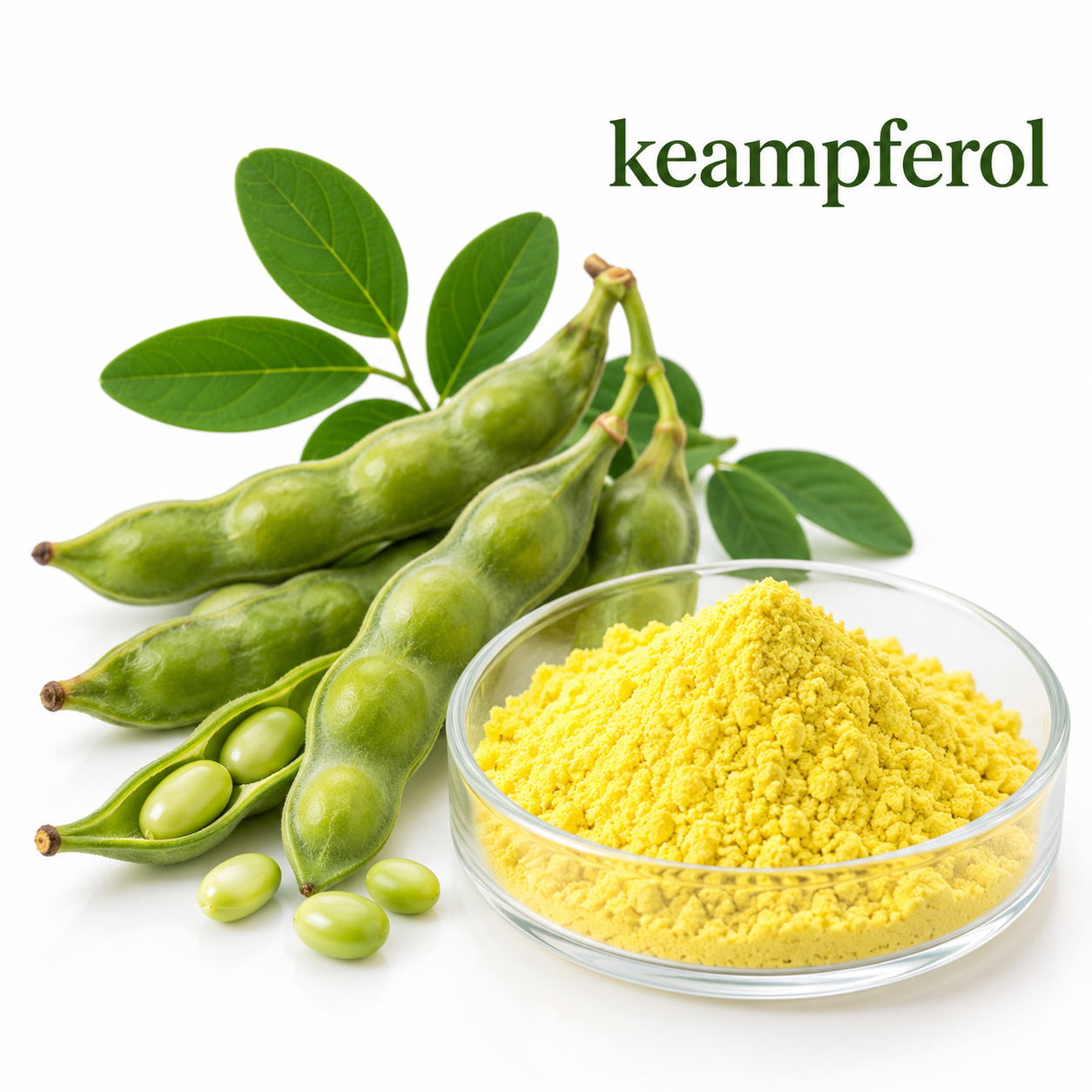
| Source | Sophora japonica flower bud / fruit (Huai Mi / Huai Jiao) |
| Appearance | Yellow to yellow-green crystalline powder |
| Minimum order | 1 kg (samples 10–20 g available) |
| Packaging | 1 kg aluminum-foil bag / 25 kg fiber drum |
| Compliance statements | Non-irradiated, non-GMO, TSE/BSE free, no ETO; ISO / Kosher / Halal-managed production |
Hunan Noksoul Biological Technology Co., Ltd. (VistaExtract) is a botanical extract manufacturer based in Huaihua, Hunan, China. The company operates a comprehensive extraction workshop of approximately 4,200 m² with a 1,700 m² laboratory, and runs integrated lines covering synchronous extraction of multiple Sophora actives as well as other botanical ingredients. Its products are exported in volume to Europe, the United States, Japan and Southeast Asia.
This article is provided for business and technical-information purposes. Statements about industries and research directions describe general configuration of the ingredient by sector and are not claims of therapeutic effect for any product. Structure and process descriptions are simplified for orientation. Images marked "AI-assisted illustrative image" are generated for illustration and do not depict specific facilities.

