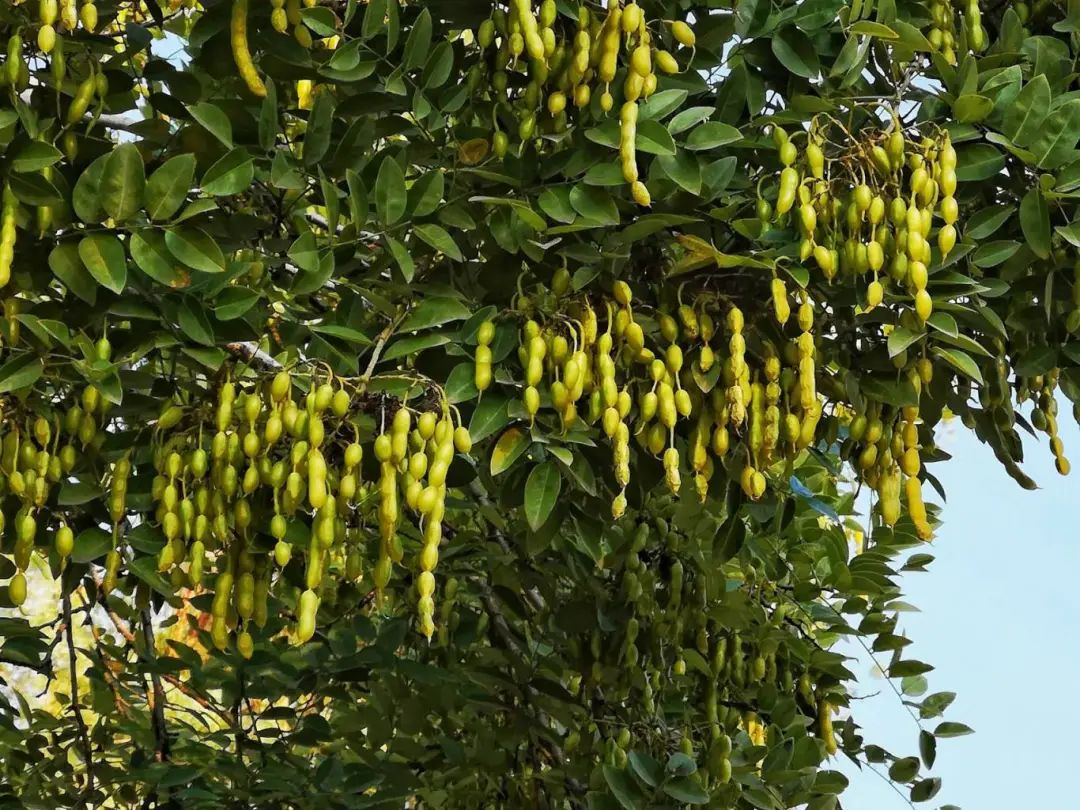
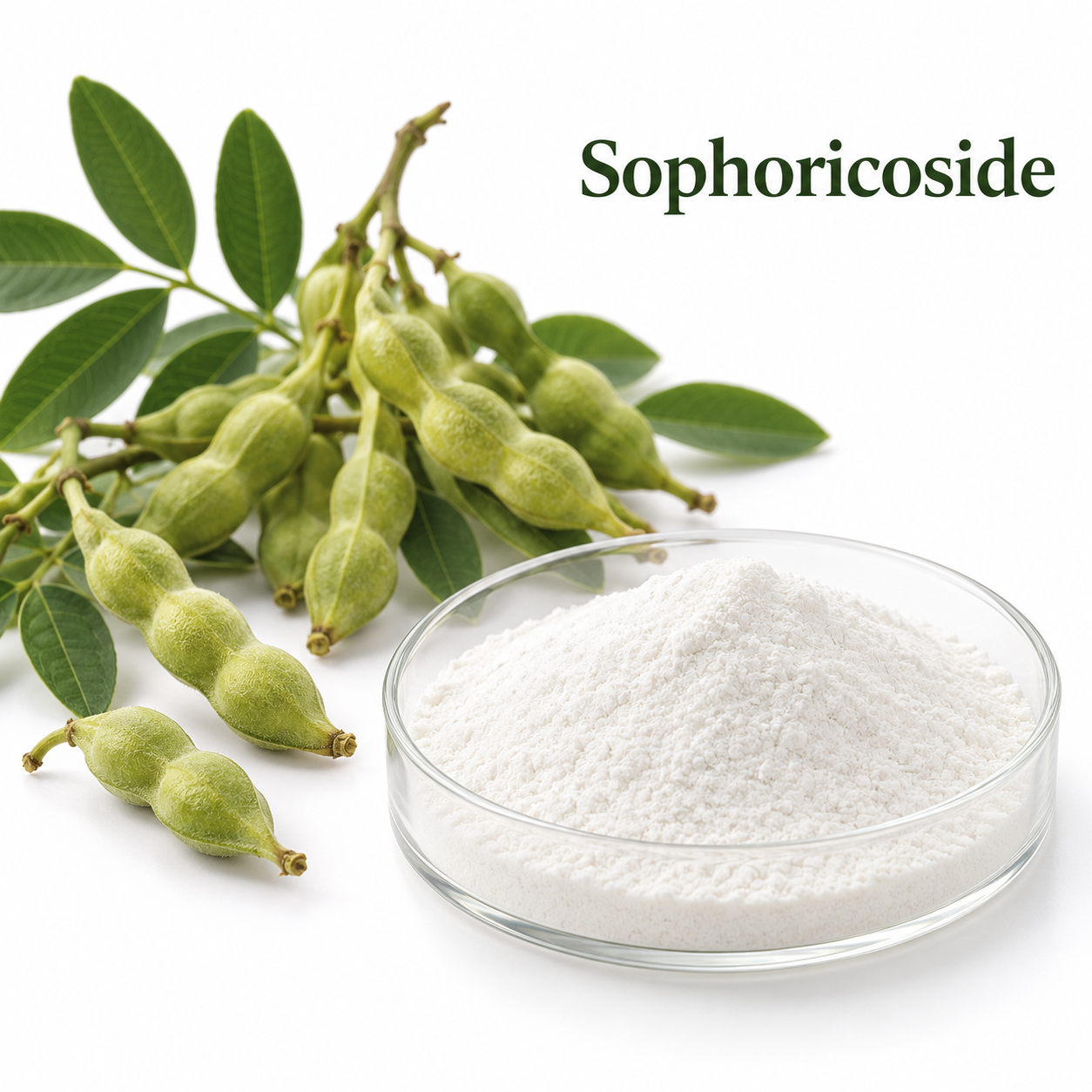
Most people have heard of genistein. Far fewer have heard of the molecule that plants make first — genistein with one glucose unit attached, known as sophoricoside. It is the major isoflavone glycoside of the pagoda tree fruit (Sophora japonica, Huai Jiao), a traditional Chinese botanical whose modern life now runs through supplement factories, cosmetic labs and pharmaceutical research departments on several continents.
This article explains what sophoricoside is, where it sits in the Sophora molecule family, why the glycoside form creates very specific manufacturing challenges, and how a specialized producer — Hunan Noksoul Biological Technology Co., Ltd. (brand: VistaExtract) — keeps the molecule intact from harvest to shipment. The company's products are exported in volume to Europe, the United States, Japan and Southeast Asia.
Sophoricoside is an isoflavone glycoside: a genistein backbone (the aglycone) linked at the 7-position to a β-D-glucose unit. The sugar looks like a small detail, but it changes nearly everything that matters to a formulator — molecular weight (432.38 vs 270.24), solubility, stability, absorption behavior, and even what an HPLC method must be validated to measure.
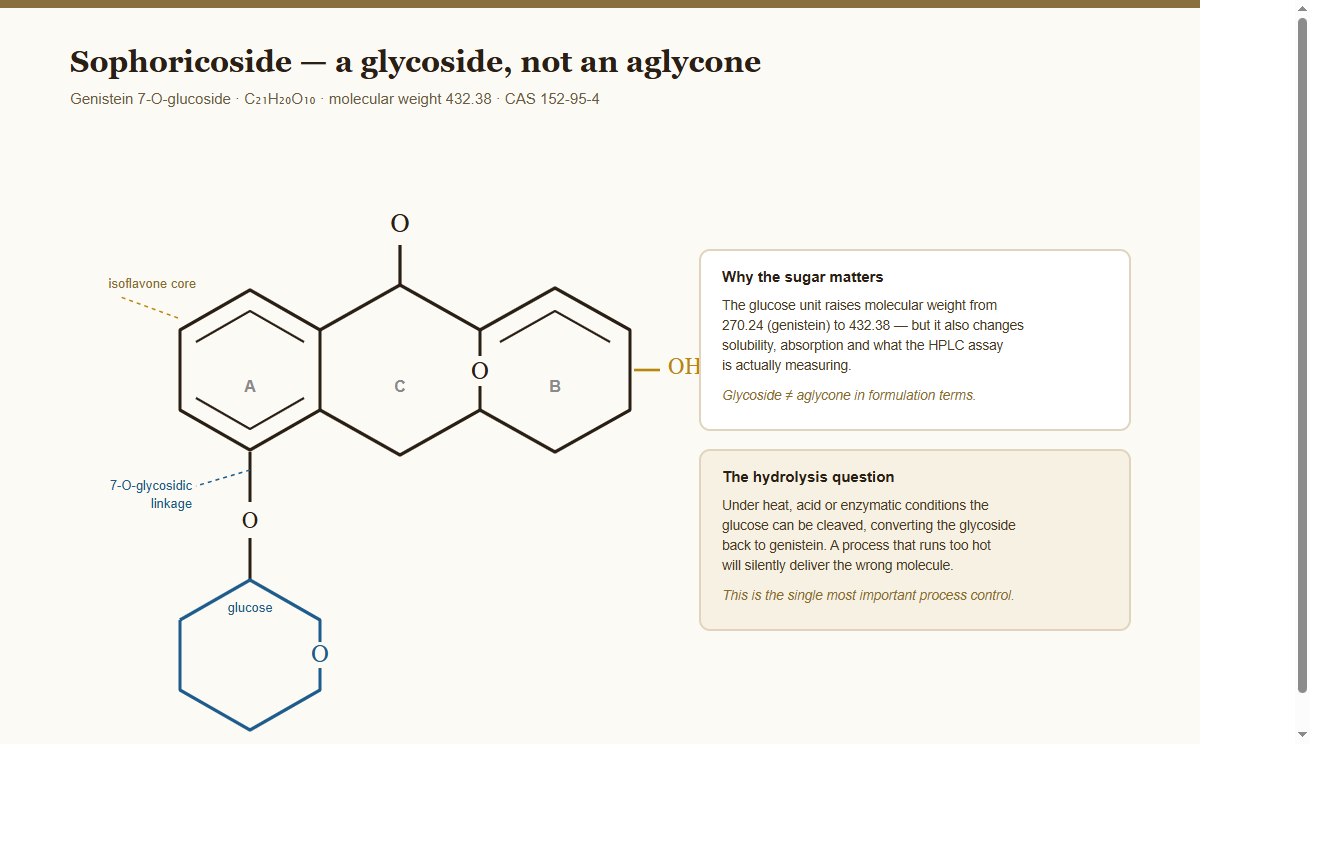
Why the sugar matters. Under heat, acid or enzymatic conditions, the glucose can be cleaved and the glycoside quietly converts back to genistein. A process that runs too hot does not just lose potency — it delivers a different molecule than the one on the specification sheet. Hydrolysis control is the single most important process parameter for this ingredient.
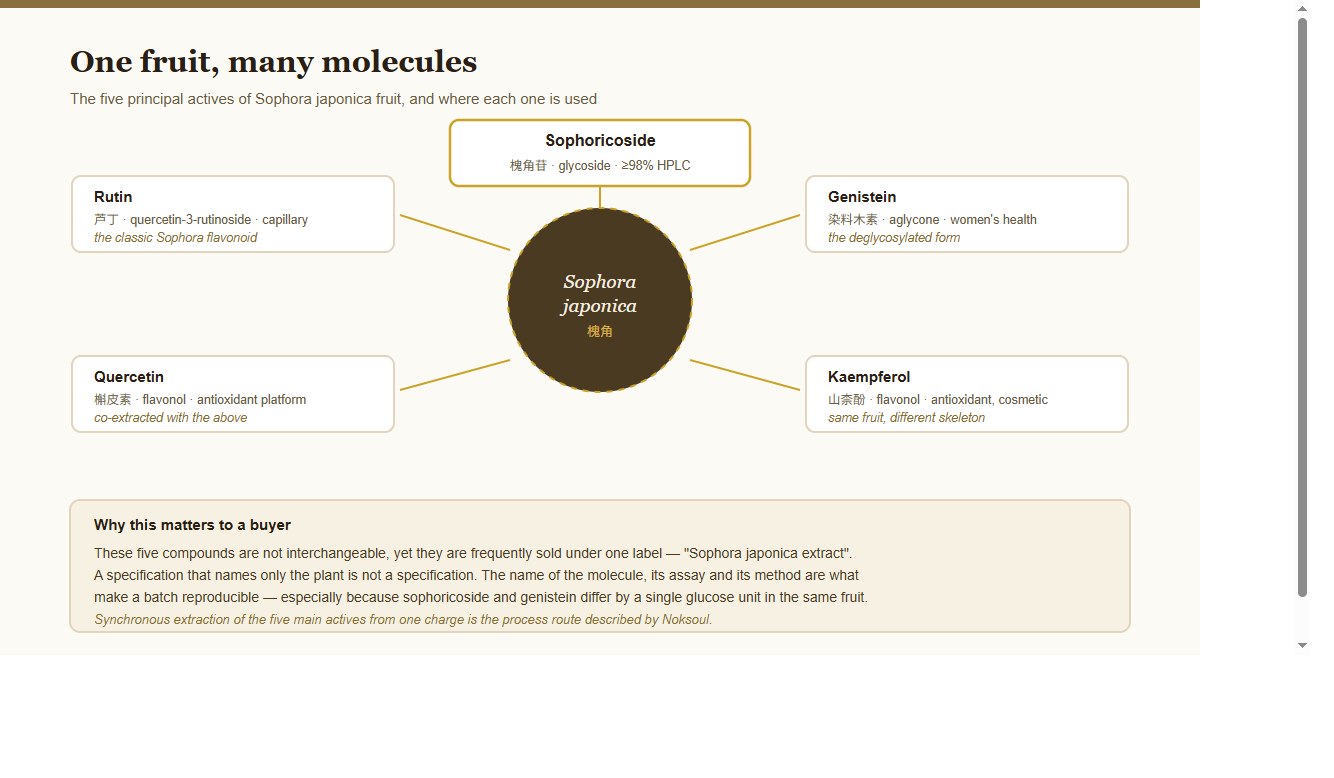
Sophora japonica fruit is not a single-molecule botanical. Alongside sophoricoside it contains genistein, kaempferol, rutin and quercetin — a family of flavonoids with overlapping but distinct technical profiles. That is why "Sophora extract" can mean very different things depending on which compound is standardized, and why buyers increasingly specify the molecule, not the plant.
Hydrolysis pressure is not constant across a production line. It rises through hot extraction and peaks during concentration, then falls again under chromatography and low-temperature recrystallization. Three failure modes account for most lost batches:
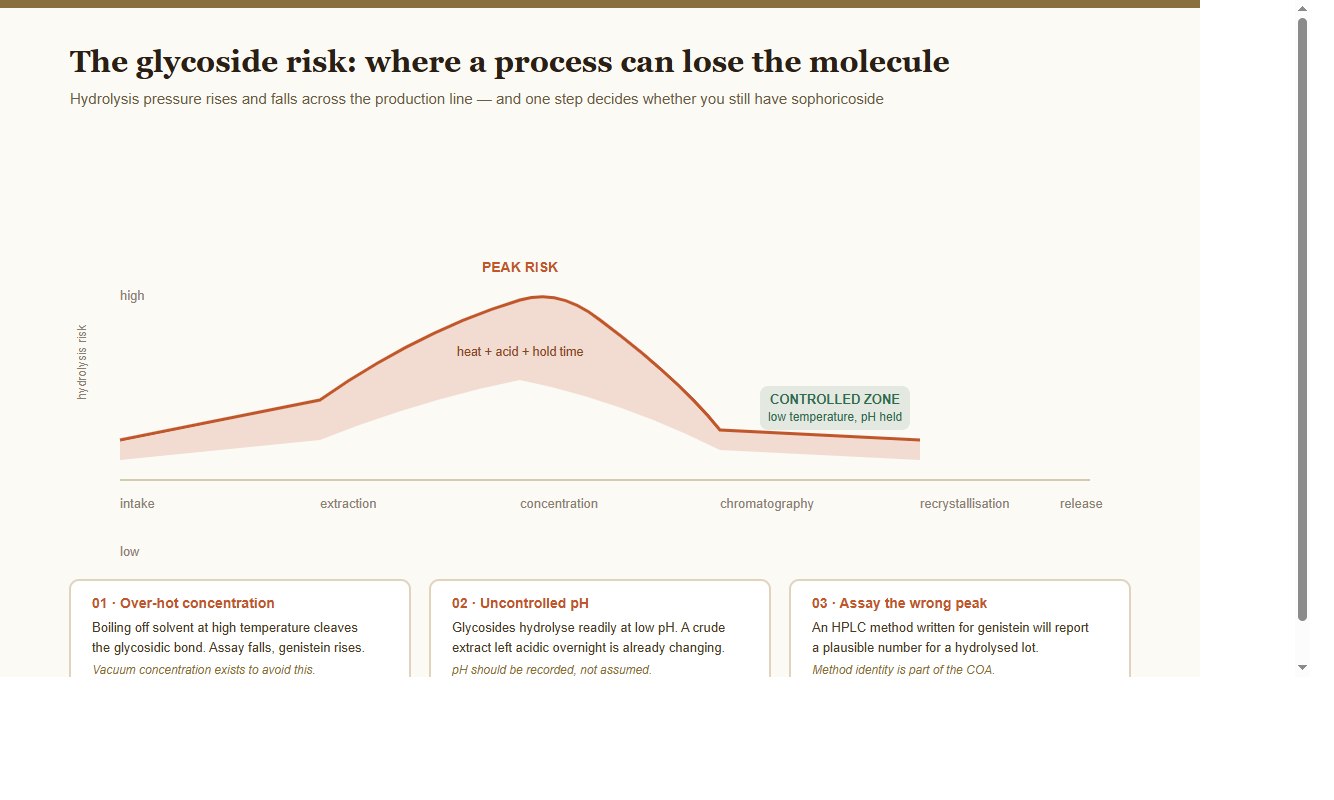
Hunan Noksoul Biological Technology Co., Ltd. produces sophoricoside from Sophora japonica fruit through a route designed around one priority: keep the glycoside intact. The chain runs from raw-material intake through food-grade ethanol extraction, low-temperature vacuum concentration, column chromatography, low-temperature recrystallization, and finally batch release testing.
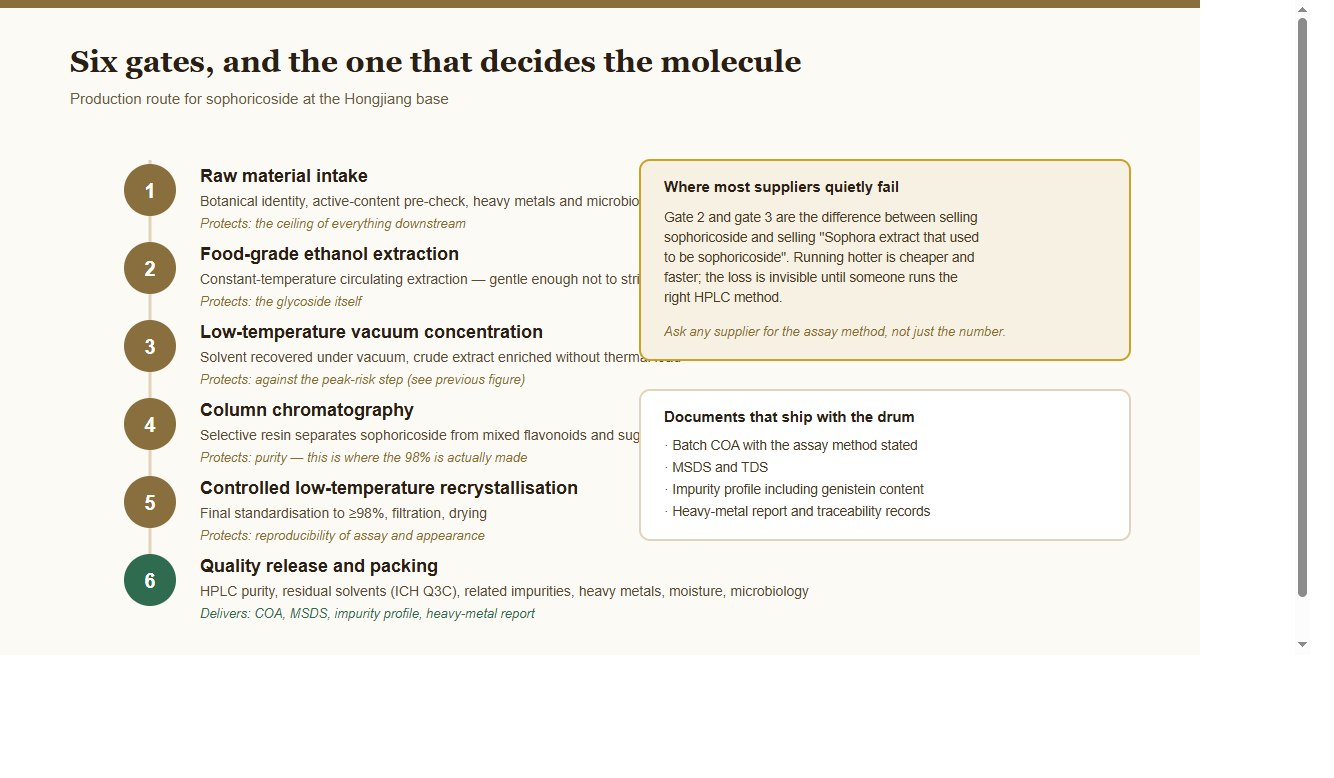

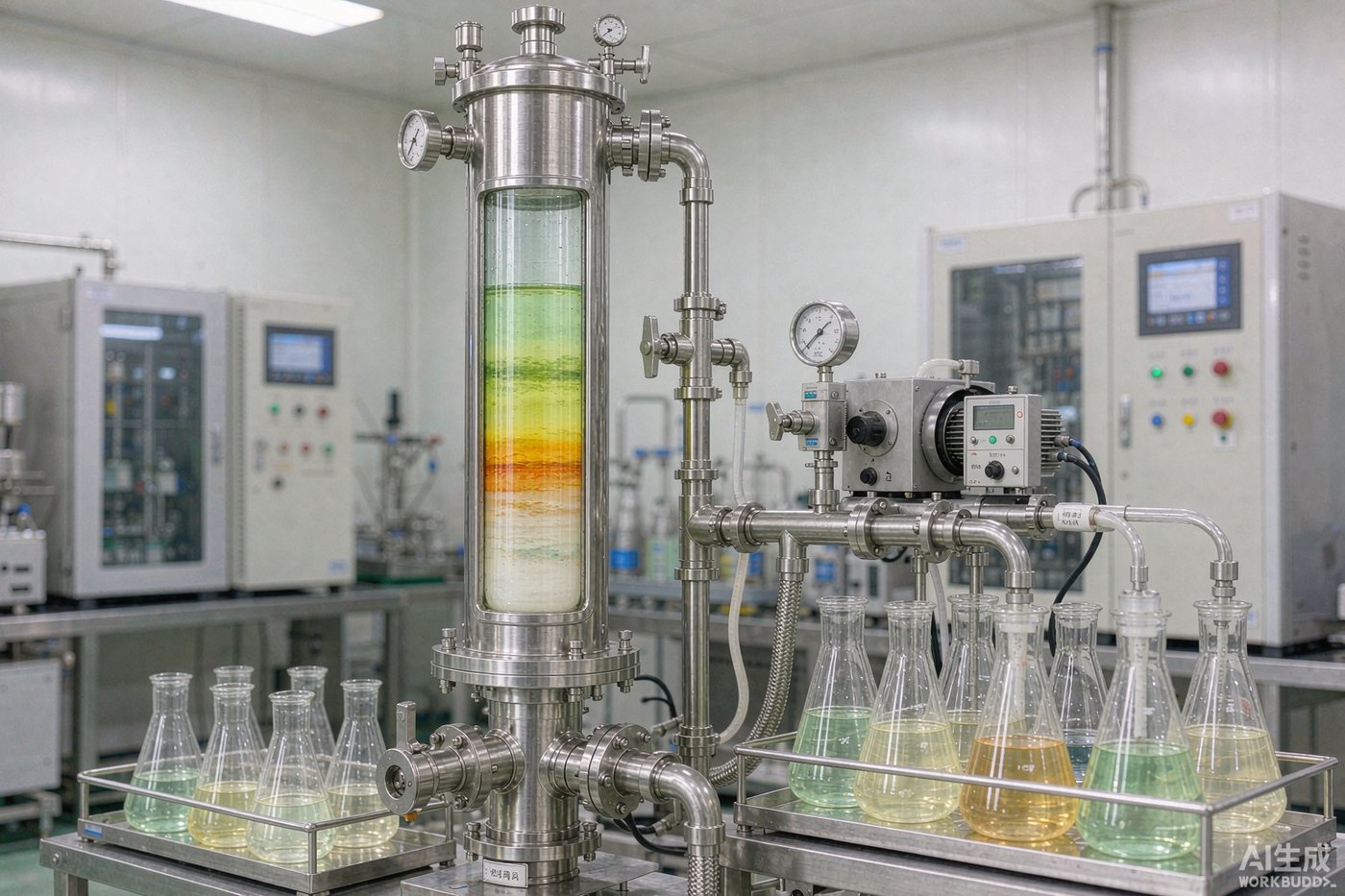
Each gate has a documented owner, a written parameter window and a release record. Where a supplier most easily fails quietly — concentration temperature, pH hold time, recrystallization solvent control — the process runs at deliberately conservative settings, because the glycoside is less forgiving than its aglycone.
Sophoricoside sits at the intersection of the wellness, beauty and health sectors. As a standardized botanical isoflavone glycoside, it is configured across dietary supplements, cosmetics and skincare, ingestible beauty (nutricosmetics), functional food and beverage, pharmaceutical research, and adjacent uses such as oral care and traditional-medicine-adjacent formulations. These reflect general industry configuration of the ingredient, not claims about any finished product.
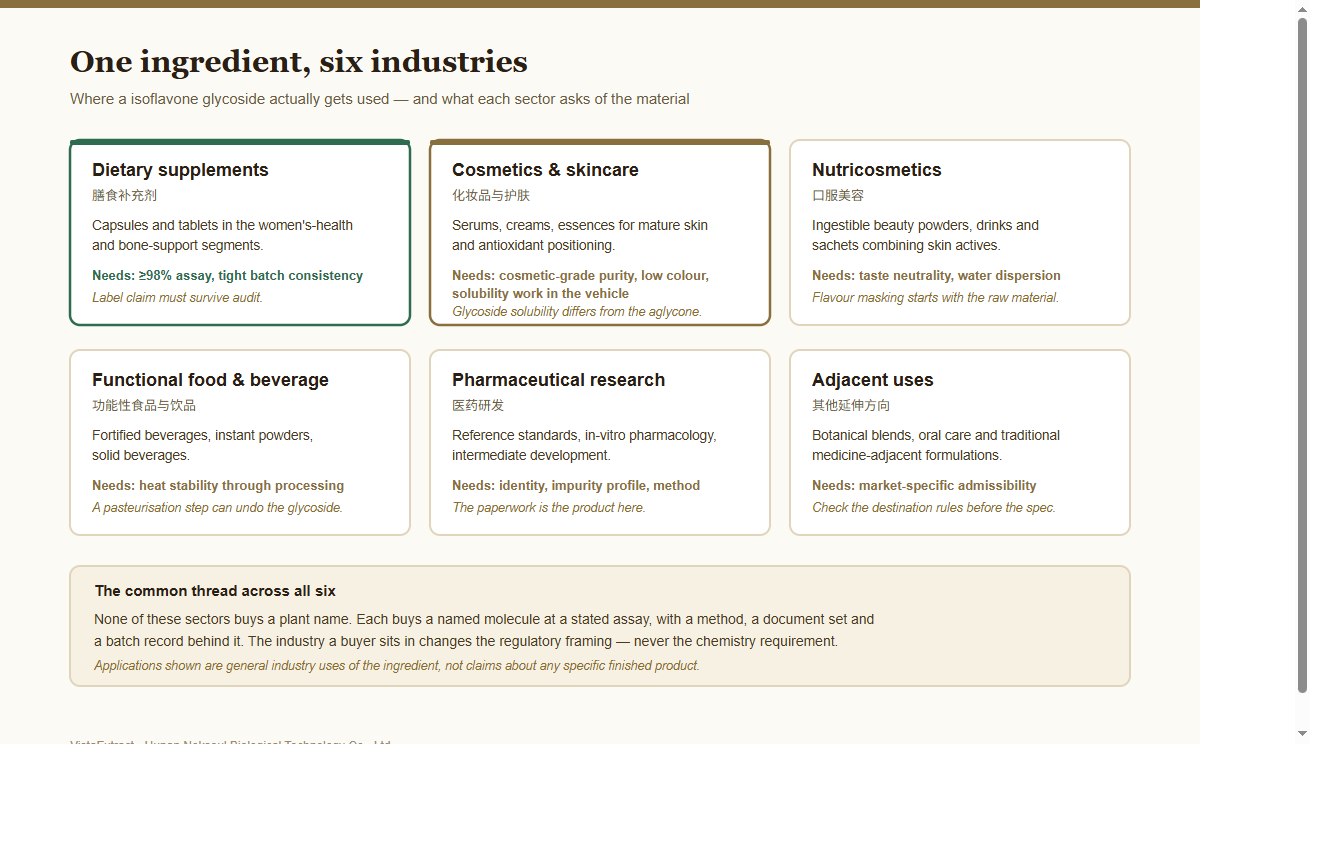
The common thread: none of these sectors buys a plant name. Each buys a named molecule at a stated assay, with a method, a document set and a batch record behind it. The industry a buyer sits in changes the regulatory framing — never the chemistry requirement.
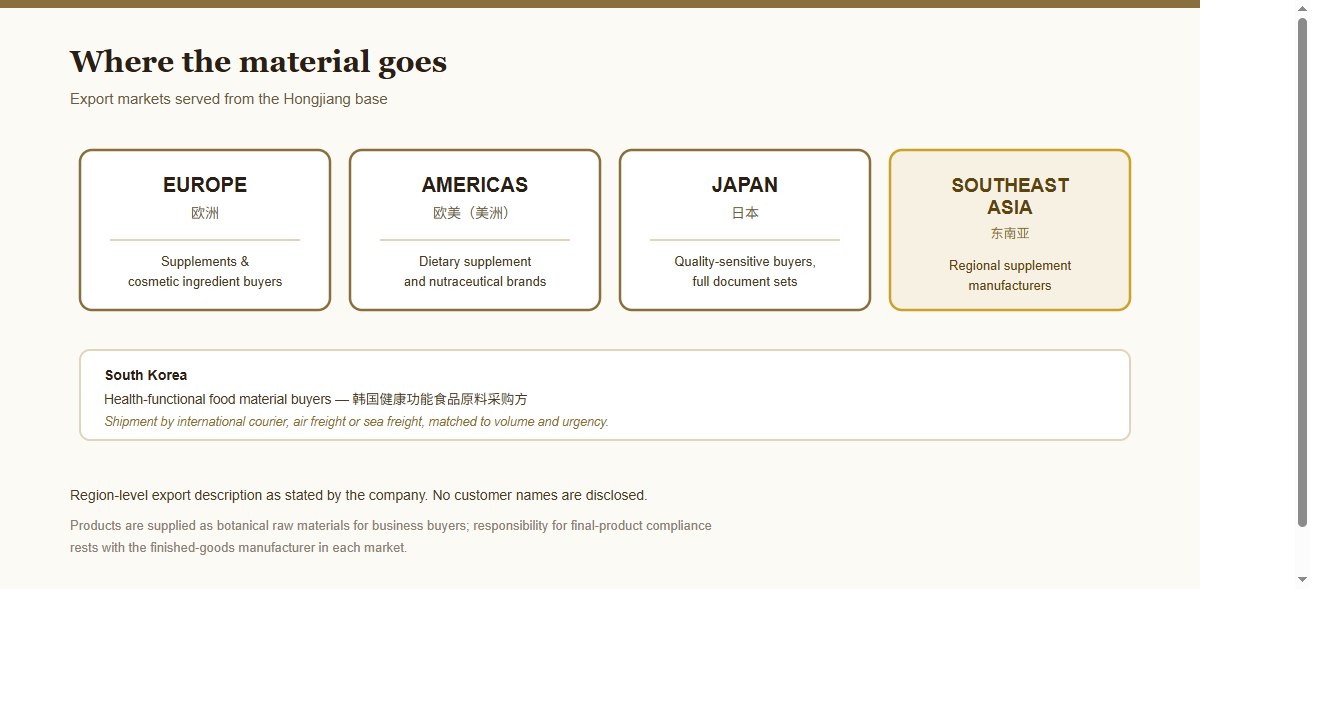
VistaExtract sophoricoside is shipped in commercial volumes to Europe, the United States, Japan and Southeast Asia, with Korea an active adjacent market for Sophora-derived ingredients. Each destination brings its own documentation expectations — from EU food-law dossiers to US supplement labeling inputs to Japanese and Southeast Asian import specifications.
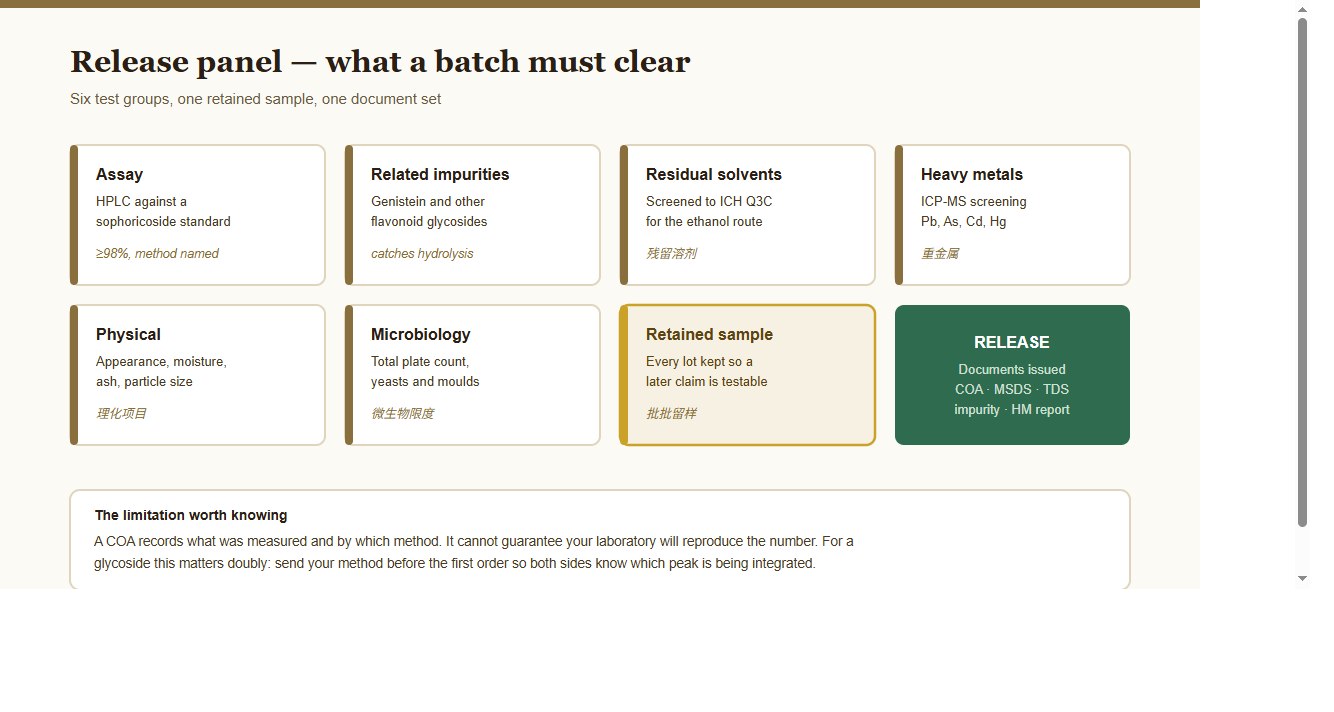
Every batch is released against a defined panel: identity (HPLC retention and UV spectrum), assay ≥98% by HPLC, related isoflavones, residual solvent, water content, heavy metals and microbiology. The document set travels with the goods: COA, MSDS, and statements covering non-irradiation, non-GMO status, absence of TSE/BSE risk and absence of ethylene oxide.

| Item | Specification |
|---|---|
| Product name | Sophoricoside |
| CAS No. | 152-95-4 |
| Molecular formula / weight | C₂₁H₂₀O₁₀ / 432.38 |
| Assay | ≥98% (HPLC) |
| Source | Sophora japonica fruit (Huai Jiao) |
| Appearance | Off-white to light yellow crystalline powder |
| Minimum order | 1 kg (samples 10–20 g available) |
| Packaging | 1 kg aluminum-foil bag / 25 kg fiber drum |
| Compliance statements | Non-irradiated, non-GMO, TSE/BSE free, no ETO; ISO / Kosher / Halal-managed production |
Hunan Noksoul Biological Technology Co., Ltd. (VistaExtract) is a botanical extract manufacturer based in Huaihua, Hunan, China. The company operates a comprehensive extraction workshop of approximately 4,200 m² with a 1,700 m² laboratory, and runs integrated lines covering synchronous extraction of multiple Sophora actives as well as other botanical ingredients such as hirudin. Its products are exported in volume to Europe, the United States, Japan and Southeast Asia.
This article is provided for business and technical-information purposes. Statements about industries and research directions describe general configuration of the ingredient by sector and are not claims of therapeutic effect for any product. Sophoricoside structure and process descriptions are simplified for orientation. Images marked "AI-assisted illustrative image" are generated for illustration and do not depict specific facilities.

